

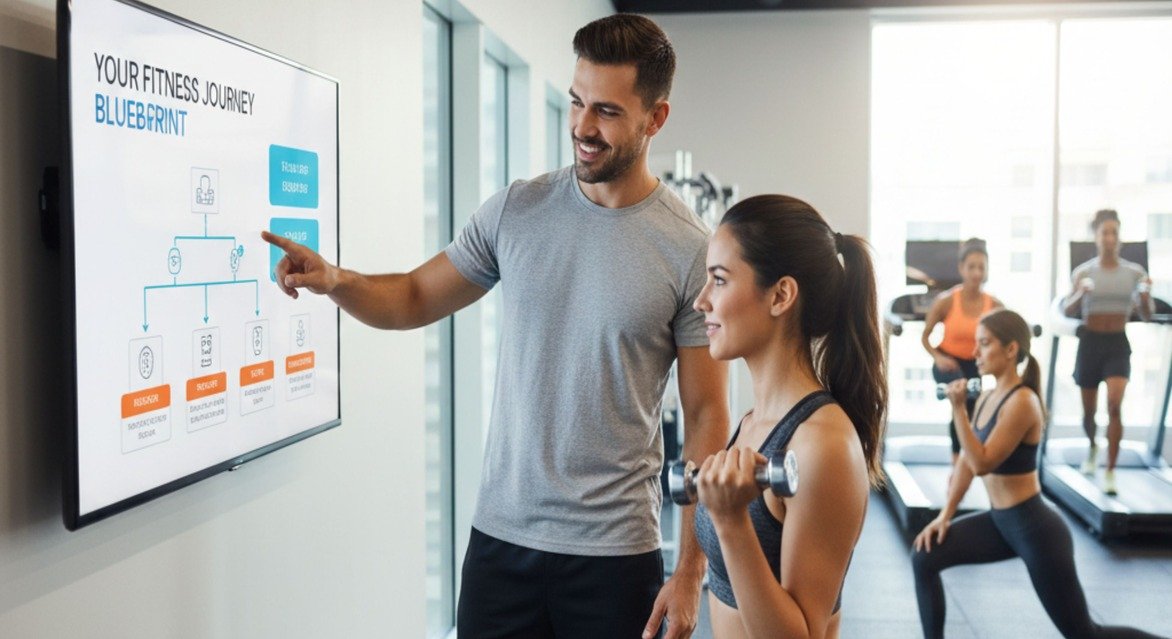
The Complete Guide to Starting Your Fitness Journey (Step-by-Step)
Starting a fitness journey can feel overwhelming, but the right structure, guidance, and mindset make success achievable. This guide walks beginners through each stage of getting fit—clearly, safely, and sustainably.
Key Takeaways:
- How to set realistic fitness goals
- Why professional guidance accelerates results
- The role of training, nutrition, and recovery
- Common beginner mistakes to avoid
- How personalized support improves long-term consistency
Introduction: Your Fitness Journey Starts Here
Starting your fitness journey isn’t about perfection—it’s about progress. Many beginners struggle not because they lack motivation, but because they lack clarity. With so much information online, it’s easy to feel stuck before you even begin.
This step-by-step guide is designed to simplify the process. Whether your goal is weight loss, strength, confidence, or overall health, this article will help you understand what to do, when to do it, and why it matters. Think of this as your foundation for building lifelong fitness habits—without confusion or burnout.
Step 1: Define Your “Why” Before You Train
Before workouts, meal plans, or apps, you need purpose.
Ask yourself:
- Do I want more energy?
- Am I training for health, aesthetics, or performance?
- What does success look like in 3 months?
Clear goals help a personal fitness trainer design strategies that match your lifestyle, not someone else’s routine. Beginners who define their intent early are more likely to stay consistent and avoid quitting within the first few weeks.
Step 2: Start With Professional Guidance (It Matters More Than You Think)
Many beginners try to “figure it out” alone. While this works for some, most people benefit from expert direction early on.
Working with an ACE certified personal trainer or an ISSA certified personal trainer ensures:
- Safe exercise execution
- Proper progression
- Reduced injury risk
- Faster, measurable results
If you’re unsure whether to hire a personal trainer, consider this: form errors and poor programming can delay progress by months.
For flexibility and convenience, many beginners now choose to hire an online personal trainer, gaining structure without being tied to a gym schedule.
Step 3: Understand the Role of Strength Training
Strength training isn’t just for bodybuilders. It’s essential for beginners.
Benefits include:
- Improved metabolism
- Better posture and balance
- Stronger joints and bones
- Sustainable fat loss
A strength and conditioning coach focuses on building functional strength gradually, while online strength training allows beginners to train confidently from home.
Many beginners prefer working with an online strength training coach because it removes intimidation and allows progress at a comfortable pace.
Step 4: Nutrition Is Not Optional—It’s Foundational
Training without nutrition guidance is like driving without fuel.
A certified nutrition coach helps you:
- Eat for energy, not restriction
- Balance macronutrients properly
- Avoid crash diets
- Build sustainable habits
For convenience, working with an online nutrition coach allows meal guidance that adapts to your routine, preferences, and goals.
When training and nutrition align, results accelerate. That’s why many beginners benefit from nutrition coaching programs that evolve as progress improves.
Step 5: Avoid Common Beginner Mistakes
Most beginners struggle due to avoidable errors:
- Training too hard, too soon
- Copying advanced workout routines
- Ignoring recovery and sleep
- Over-restricting calories
- Switching plans too frequently
A professional fitness trainer helps prevent these mistakes by creating a realistic progression plan. Long-term results come from consistency—not extremes.
Step 6: Choose the Right Coaching Style for You
There’s no one-size-fits-all approach. Today’s fitness industry offers multiple options.
Here’s a simple comparison:
| Coaching Type | Best For | Key Benefit |
|---|---|---|
| Gym-based trainer | In-person motivation | Hands-on correction |
| Fitness coach online | Flexible schedules | Anywhere access |
| One-on-one digital support | Personalized accountability | Tailored feedback |
| Hybrid coaching | Busy professionals | Balance & structure |
Many beginners find online fitness coaching effective because it blends structure with flexibility. The best results often come from one on one online fitness coaching, where programs adjust as you progress.
Step 7: Weight Loss Requires Strategy, Not Guesswork
If weight loss is your goal, random workouts won’t cut it.
A structured approach from an online personal trainer for weight loss focuses on:
- Progressive workouts
- Calorie awareness
- Muscle preservation
- Habit-building
Some clients prefer working with an online trainer for weight loss because accountability is built into the process—without pressure or judgment.
Step 8: Bodybuilding vs. General Fitness—Know the Difference
Not all training styles are the same.
A bodybuilding coach focuses on muscle development and physique symmetry, while a personal bodybuilding coach tailors aesthetics with precision.
For remote clients, an online bodybuilding coach provides detailed programming, posing guidance, and recovery strategies—especially helpful for structured physique goals.
Beginners don’t need bodybuilding routines, but understanding training styles helps you choose the right path.
Step 9: The Importance of Structured Training Plans
Random workouts lead to random results.
Structured programs like online personal training plans provide:
- Weekly progression
- Balanced muscle development
- Built-in recovery
A well-designed personal trainer workout plan adapts as your strength improves, while a personal trainer fitness plan ensures training stays aligned with your lifestyle—not against it.
This level of structure is often missing when beginners train alone.
Step 10: Accountability Is the Real Game-Changer
Motivation fades. Systems last.
Working with a fitness professional trainer adds:
- Regular check-ins
- Progress tracking
- Adjustments when life gets busy
That’s why fitness coaching online has grown rapidly—it keeps people consistent without overwhelming them.
Some beginners explore best online fitness coaching programs to find structure, while others prefer curated online fitness coaching packages that scale with their goals.
Step 11: Learn the Language of Fitness
Understanding terminology improves confidence and decision-making.
If you ever feel confused by fitness jargon, we recommend reading our related guide:
“Your A–Z Fitness & Training Terminology Guide”
It’s a helpful resource that breaks down common training and nutrition terms in beginner-friendly language.
Step 12: Track Progress Beyond the Scale
The scale doesn’t tell the full story.
Better indicators include:
- Strength improvements
- Energy levels
- Body measurements
- Sleep quality
- Consistency streaks
A best certified personal trainer focuses on these performance metrics rather than short-term weight fluctuations.
Step 13: Why Personalized Coaching Delivers Better Results
Fitness becomes sustainable when it fits your life.
A best online fitness coach customizes:
- Training intensity
- Nutrition guidance
- Recovery needs
- Schedule flexibility
This is why many beginners eventually choose online fitness and nutrition coach support—it connects all aspects of health into one system.
Lead Magnet: Beginner Roadmap
Starting without direction leads to frustration. That’s why many beginners benefit from a structured roadmap that adapts to their goals, schedule, and fitness level.
Lead Magnet:
📘 30-Day Beginner Fitness Roadmap
A clear starting framework designed to help you build habits, stay consistent, and progress safely—without guesswork.
Ready to stop feeling confused and start seeing results?
Get expert guidance – Download the app
Access personalized training, nutrition support, and ongoing accountability from experienced fitness professionals.
About the Author
The author Eric Welch is a seasoned professional fitness training specialist with extensive experience in coaching beginners through sustainable fitness transformations. With a background in evidence-based exercise programming and personalized nutrition strategies, the author focuses on helping individuals build strength, confidence, and lifelong healthy habits through structured, results-driven coaching.
1 Comment